
Music Play
Nurturing the development of children ages 0-3 with music
Learn how to see and grow the musician already growing inside your little one.
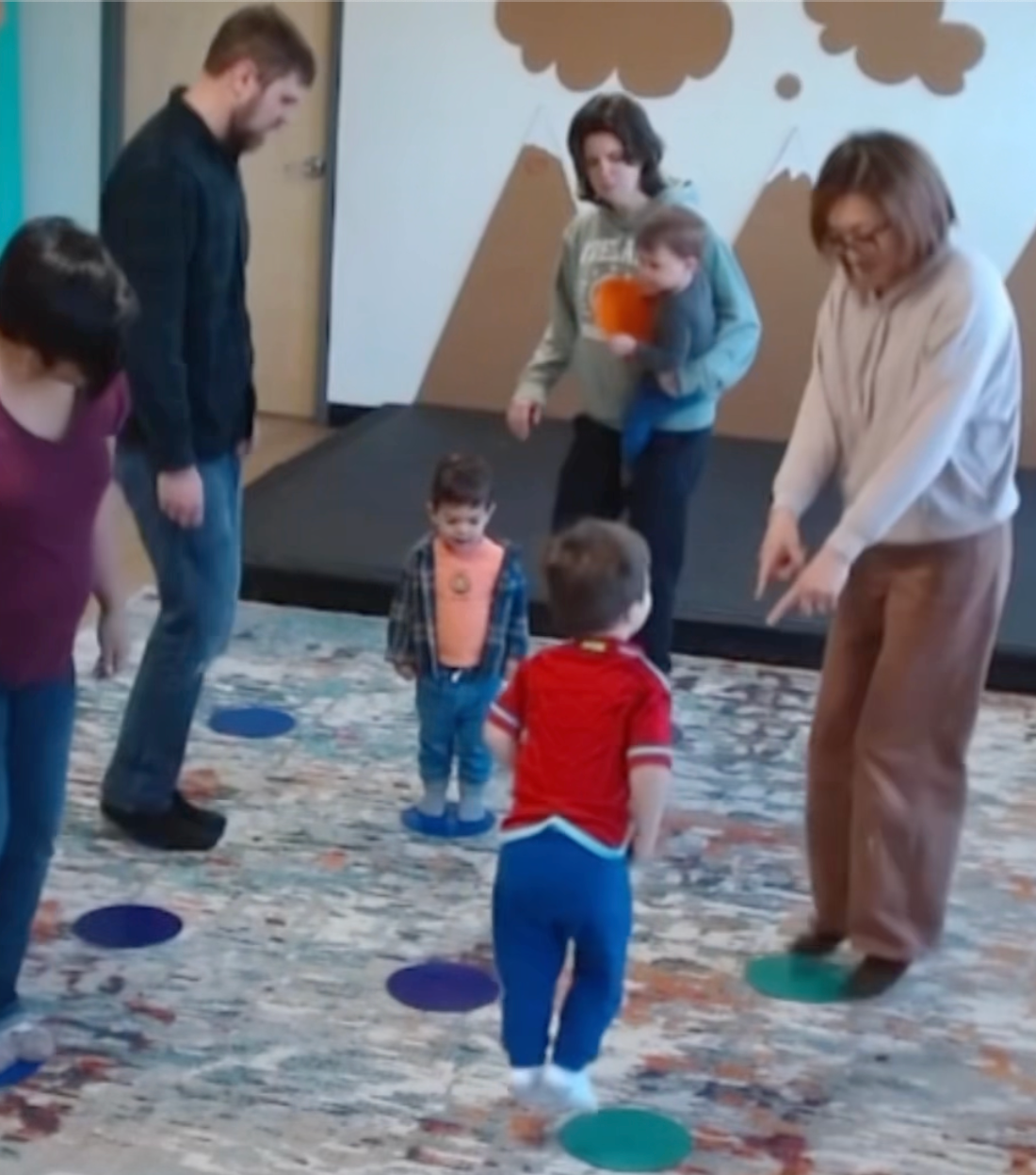
How? By tuning in to the mind, breath, body, and sound connection within you and your child, a guided developmental music experience is more like a yoga class than it is what you might expect from a music class for children. By creating a developmentally rich environment through live singing, purposeful movement, and musical dialogue, Music Play immerses babies and toddlers in a variety of melodies, rhythms, patterns, and musical ideas. Caregivers learn to recognize and follow the musicality already emerging in their child and how to foster it through responsive play.
Music Play Groups - Fall Beginnings
For families who want to build their child’s musical foundation from the beginning
4 Live Interactive Classes
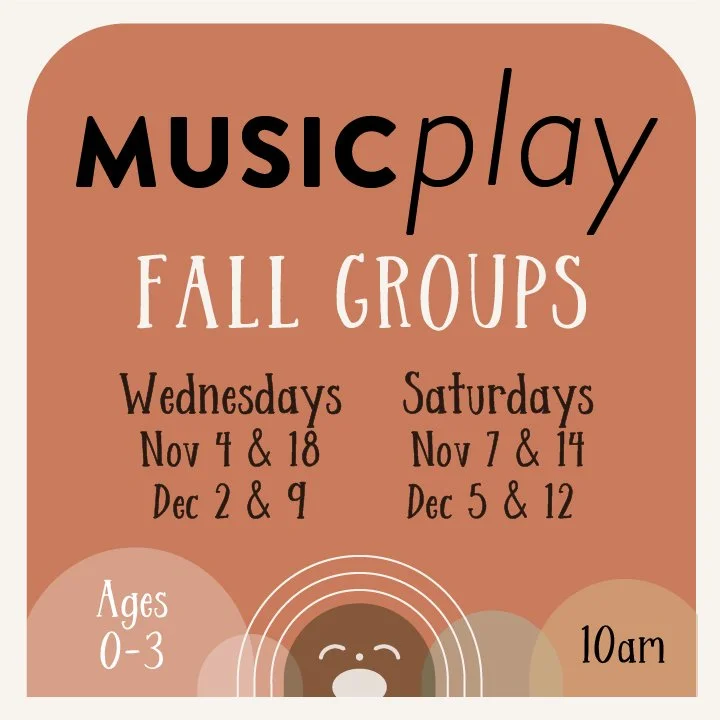
Wednesdays
10-10:45am | Mixed Ages 0-3 Nov 4 & 18, Dec 2 & 9
(No class 11/11 Veterans' Day)
Saturdays
9-9:45am | Babies Only TBD based on enrollment
10-10:45am | Mixed Ages 0-3 Nov 7 & 14, Dec 5 & 12
Music Play Home Companion
Online hub with a Music Play family community, video demos, and practical ways to foster music development and interactivity at home
Fall Special $98
Limited to 8 families per group
“I have to tell you that *** really enjoys coming to your classes, and when I ask her what’s her favorite class, she says it is yours! It is fascinating to me to see how the rhymes and rhythms that you use actually catch the attention of these kids and enter their brains!
You emanate the music within you, and I am someone who really values evidence-based interventions, so I can tell that your way of teaching, singing, and moving is levels above the other music classes.
And thank you too, for being attuned to *** and for allowing her to be free during the classes.”
-Zlatina
“Through classes this year, I have come to value how much dedication Jenie puts into preparing for her classes. She always has a strategy for which songs will be in the rotation along with appropriate instrument exposure for the ages of the children. I have loved hearing my sons echo our voices in response to the music.
During all sessions with Jenie, she takes great care to engage each child individually.”
-Corinna
“We have incorporated not only the songs, but many of the lessons that we learned in class into our lives. Utilizing songs to give my daughter a direction or to help her follow a routine has been so helpful as she has entered the toddler phase. This use of music was a parenting skill that I learned from Jenie in class. In this way, the class was about more than just singing and moving together.
It was truly about fostering a love of music and weaving music into all that we do.”
-Stephanie
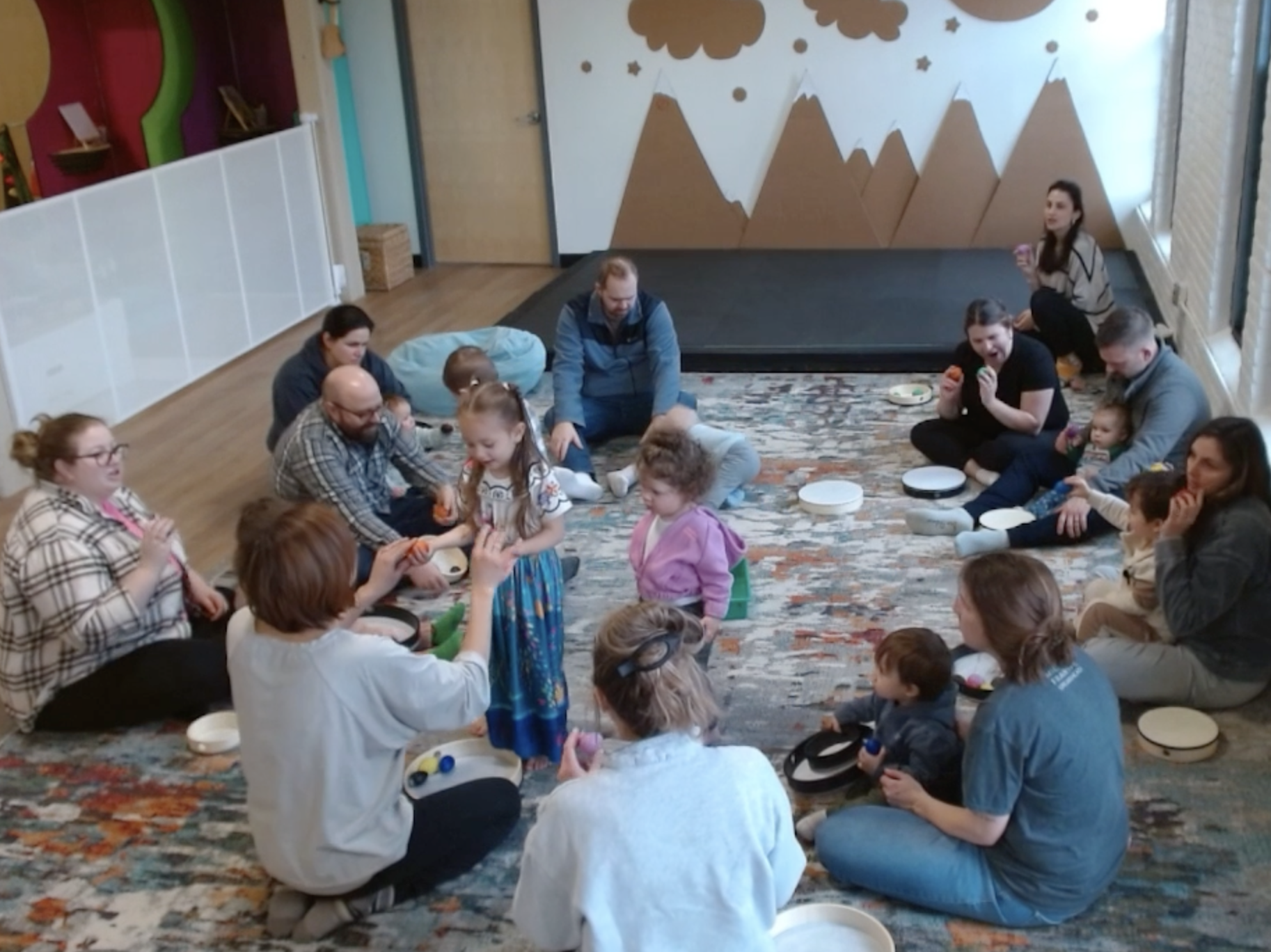
Music Play is about more than songs and instruments.
It is a space where we pay attention to what your child is hearing, remembering, anticipating, responding to, and discovering.
Rich Music for Developing Musical Minds
Children need more than familiar songs, redundant content, and overstimulating experiences.
Music Play draws from a rich musical vocabulary—different tonalities, meters, rhythms, melodies, movement, patterns, and musical ideas—so children have opportunities to hear, experience, and express music in many different ways.
Grounded in How Children Learn Music
Music Play is informed by early childhood development, Music Learning Theory (MLT), and decades of experience teaching music across early childhood, elementary, and piano settings.
That means we're not simply filling 45 minutes with activities.
Every song, movement, pattern, interaction, and moment of silence has a purpose: giving children opportunities to listen, respond, imitate, anticipate, explore, and express music.

Why the earliest years matter
Do babies and toddlers really need music class?
Neuroscience and early childhood research affirm that the first three years of life represent a critical window for musical development. During this time, the brain is exceptionally receptive to sound, rhythm, and pitch. Without rich musical exposure, innate musical aptitude rapidly declines. But when nurtured intentionally, this potential can grow into an extraordinary lifelong relationship with music.
In the first months and years of life, a child’s brain is exquisitely tuned to absorb sound, not just as a sensory experience, but as nourishment. Neuroscientists describe sound as a cognitive nutrient — vital fuel for brain development. For infants, sound is music, and music is information. When we sing to babies, we’re not just soothing them — we’re feeding their brains with the building blocks of understanding: pitch, rhythm, timbre, and emotion. Without this rich musical input during the brain’s most receptive stage, babies don’t just lose music potential. They miss out on foundational skills. Song helps lengthen attention span, deepen cognitive processing, and spark neural pathways that shape how a child learns for life. A lack of this nourishment can mean diminished attention, reduced engagement, and a lower capacity to process the world around them.
This is why we don’t wait for “instrument-readiness.” We meet children where they are during this crucial early period: tuned into sound, wired for music, and ready to grow. Through exploration, play-based experiences, live singing, movement, and curated songs, children don’t just learn music — they live it. They naturally begin to audiate (hear and think music internally), develop rhythmic coordination, express themselves creatively, and establish the foundation for musical fluency, including reading notation, improvising, and performing with ease.
What is in a Music Play class?
• A Rich Musical Environment
Immerse children with songs in various tonalities and chants in different meters;
Allow children to learn through listening, absorption and exploration
• Ideas for Caregivers
Recognize musical responses and interact musically with your child
• Purposeful Space and Responsiveness to Child-led Play
Provide opportunities for children to process learning and respond to children’s spontaneous musicking
• Informal Pattern Guidance
Expose children to music vocabularies
• Body Awareness and Movement
Explore and model levels of movement, especially “flow” that lead to coordination
Just like learning a language, music is best learned by immersion and repetition of live singing and spontaneous interaction. Music Play classes are not designed to entertain young children, but rather to create a playful environment that focuses on using the singing voice, chants and movement that best serve their musical development. To maximize music learning at this stage, use of recordings and language is kept to a minimum in our classes. The music educational process also takes consistency, purposeful guidance and the willingness of caregivers to participate in active music-making. Together, we will give children what they need - the foundation for a lifetime of music.